
Clarendon County Arrest Records and Charges
Arrest records are created on the law-enforcement and detention side. In Clarendon County, the detention booking process can include intake, property inventory, fingerprinting, booking photo, identification band, a free phone call, housing assignment, charge paperwork, bond hearing information, and release paperwork. That record does not prove guilt. It records that an arrest or custody event occurred and that a person entered the detention or court-release process.
Court charges after arrest are different. They are the allegations filed or pursued in Magistrate Court, Municipal Court, General Sessions Court, or Family Court depending on the case. South Carolina uses the term Solicitor rather than District Attorney. Clarendon County is in the Third Judicial Circuit, and the Solicitor prosecutes criminal offenses in Clarendon, Lee, Sumter, and Williamsburg Counties. For the full court case file and final outcome, use Clarendon County criminal court records.
| Arrest / Booking Record | Court Charge Record | |
|---|---|---|
| Created By | Law enforcement or detention center. | Court, prosecutor, or charging authority. |
| Main Purpose | Shows custody, intake, bond, release, and booking context. | Shows allegations filed in court and how each charge changes. |
| Best Channel | Detention, sheriff, custody notification, or FOIA where available. | Public Index, issuing court, Solicitor, or Clerk copy request. |
The image below is sourced from the South Carolina Freedom of Information Act, which affects public-record requests for arrest and law-enforcement records.
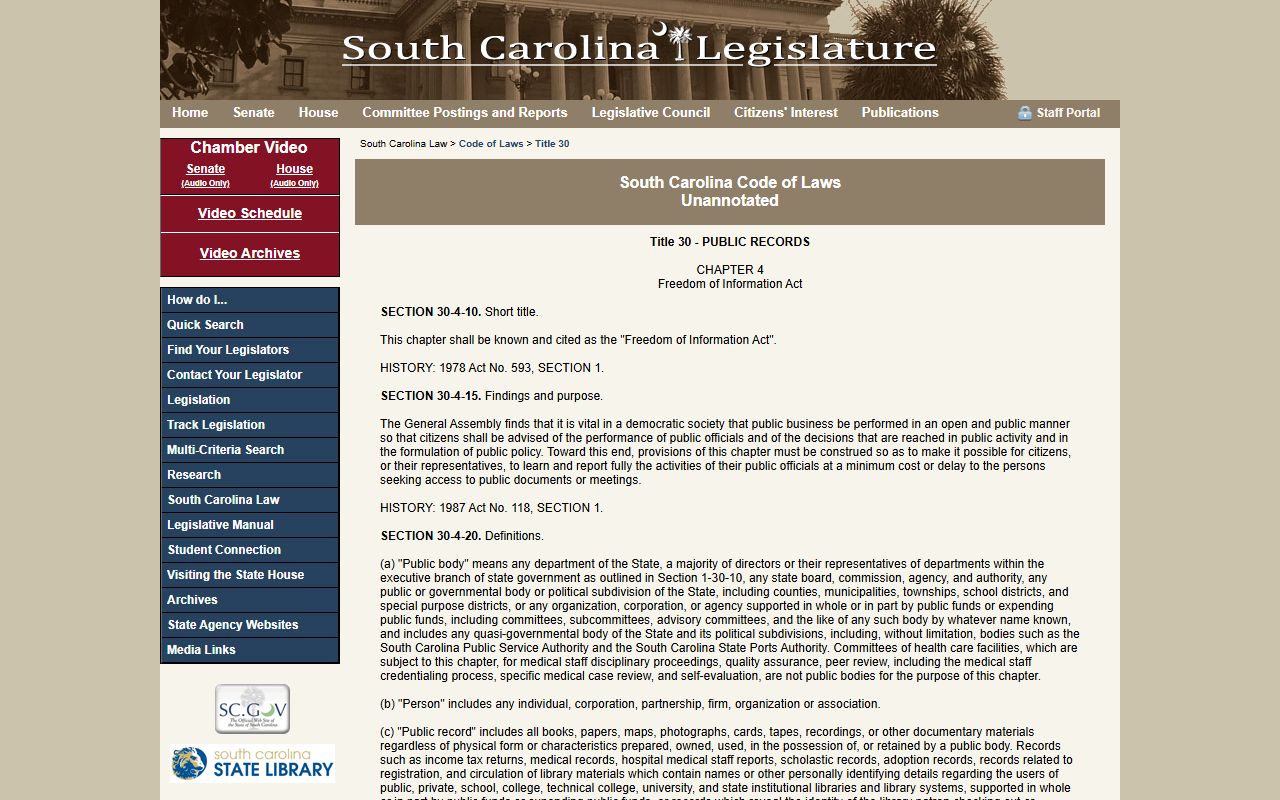
FOIA supports access to public records, but law-enforcement exemptions and court confidentiality rules can limit what is released.
Find Clarendon County Arrest Records
No official online Clarendon County jail roster was located in the research file, and no official active-warrant search was located. That makes the practical access chain important. For custody or booking status, the Clarendon County Detention Center booking and release numbers are 803-435-8831 and 803-435-0697. For sheriff records outside the court file, the Sheriff's Office FOIA page provides a written request path to the Office of General Counsel. For filed charges, use the Clarendon County Public Index and the court named on the case or ticket.
- For current custody, contact the Detention Center booking or release line.
- For filed court charges, search the Clarendon County Public Index by defendant name or case number.
- Check the court agency to see whether the charge is in Magistrate, Municipal, General Sessions, Family, or appellate court.
- Read each charge status, not just the first listed accusation.
- Use the Clerk of Court, issuing court, or Sheriff's FOIA process when an online record is missing or incomplete.
Public Index case records may show charges after arrest, but they are not a complete booking system. Detention records, court-charge records, and final criminal case records are separate layers. One arrest can create several charges, and one charge can later be amended, reduced, dismissed, or resolved through plea, trial, diversion, or expungement.
The image below comes from South Carolina statutes on personal identifying information.
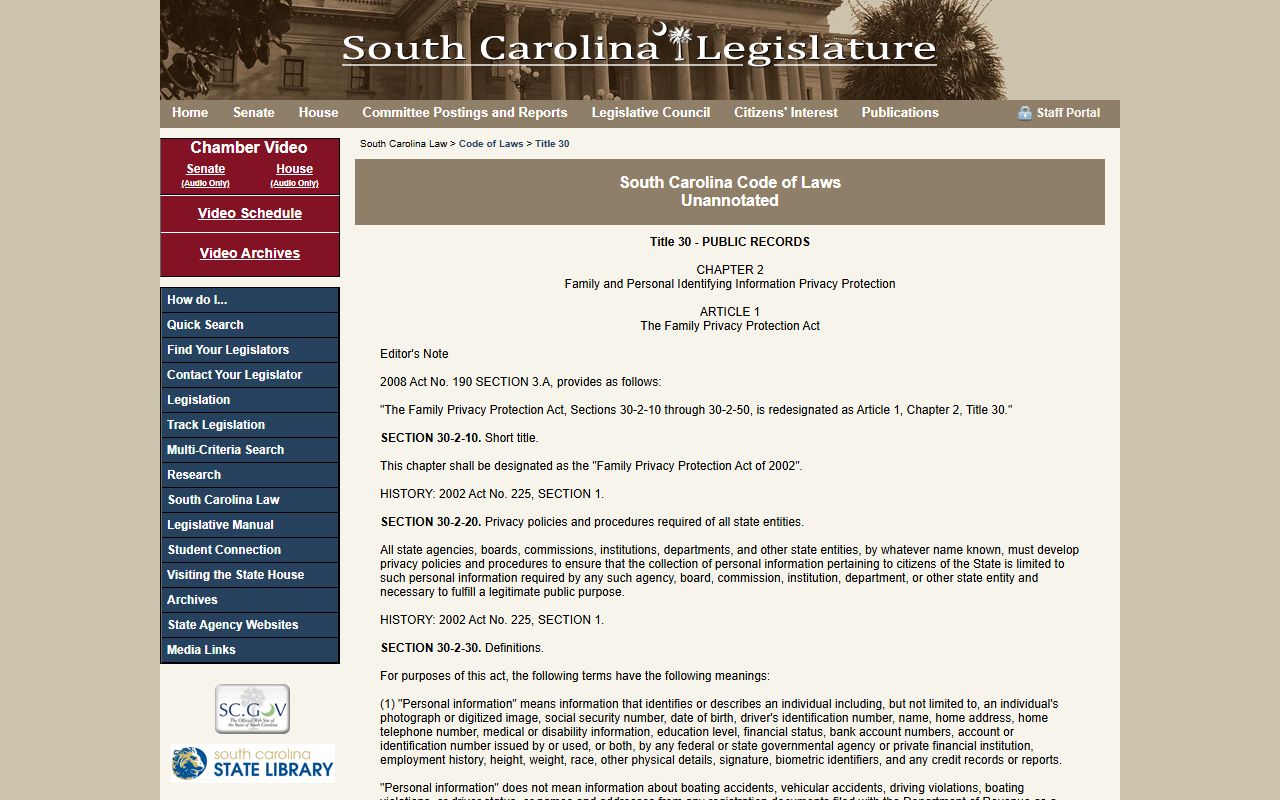
Personal-identifier rules are one reason an arrest or charge record may show less detail online than a courthouse or agency file.
Charges After Arrest in Clarendon County
The charge record begins when the allegation is placed into a court process. In South Carolina, a lower-level matter may be handled in Magistrate or Municipal Court, while more serious prosecutions move through General Sessions Court. A charging document can take different forms based on court level and offense. The record may also show bond activity, preliminary hearings, public defender application timing, and later Solicitor review.
| Complaint | Information | Indictment | |
|---|---|---|---|
| Filed By | Officer or prosecutor, depending on court process. | Prosecutor where permitted by law. | Grand jury for General Sessions felony prosecution. |
| Common Use | Lower-level or initiating allegations. | Formal prosecutor-filed accusation. | Serious criminal charges in Circuit Court prosecution. |
| Record Role | Starts or supports the court charge record. | Frames the charge pursued in court. | Moves the allegation into formal General Sessions prosecution. |
Public records may show a charge code, case type, court agency, party name, filing date, action type, and disposition. Rule 41.2 and state personal-identifier statutes can require redaction of protected details such as Social Security numbers, financial account information, minor names, and certain addresses.
Clarendon County Charge Status
Charge status changes are the core reason to check the court record rather than relying only on an arrest entry. A charge can be pending after arrest, amended after solicitor review, reduced during negotiation, dismissed by court action, or ended by nolle prosequi. A final disposition may differ from the charge that appeared at booking or on the first court entry. Read the newest docket entries before reaching any conclusion.
| Status | What It Means |
|---|---|
| Pending | The charge is filed or open, and no final disposition has been posted. |
| Amended | The charge was changed after filing, often by prosecutor or court action. |
| Reduced | The charge severity or offense was lowered as part of review, plea, or court process. |
| Dismissed | The court or prosecution ended that charge without conviction on that count. |
| Nolle Prosequi | The prosecutor declined to proceed on that charge, subject to the specific case context. |
| Convicted | A guilty plea, verdict, or finding established guilt on that charge. |
The official Rule 41.1 sealing rule is shown below.
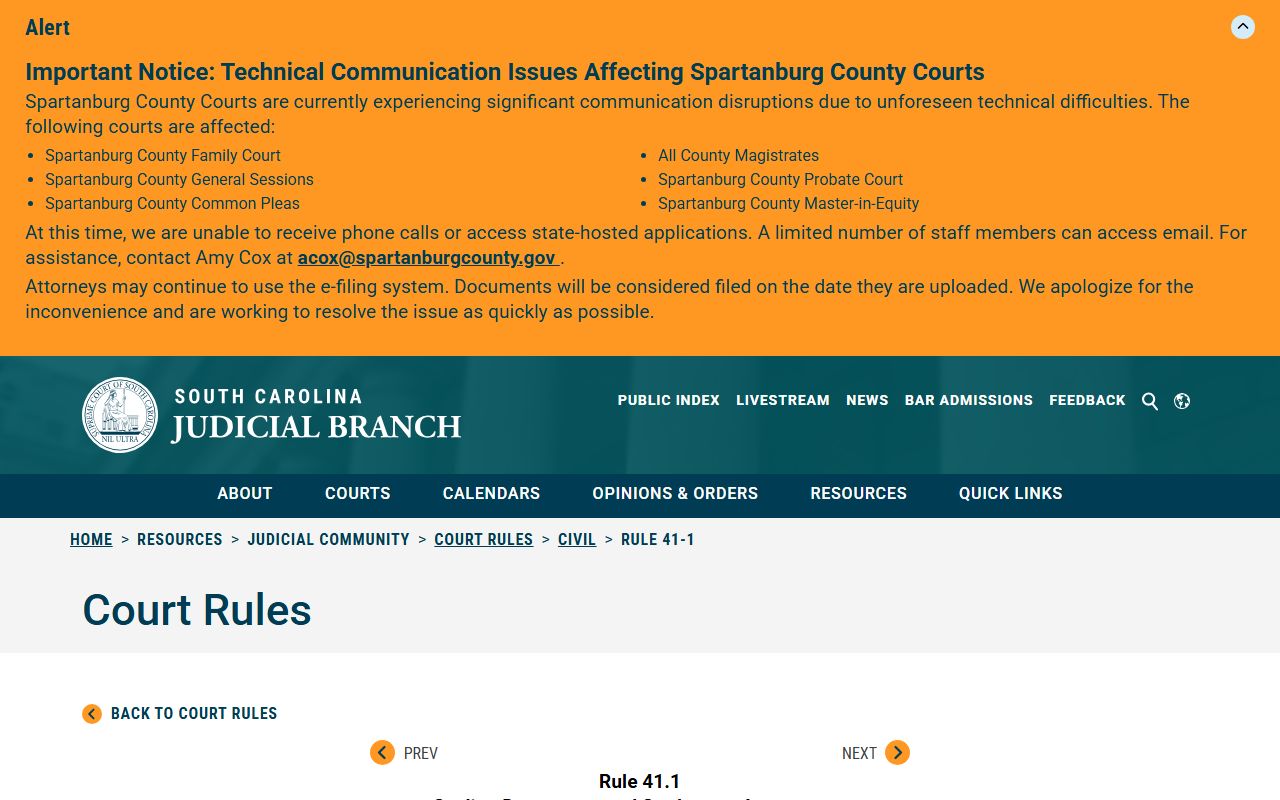
Sealing is a court process, not an informal request to hide an arrest or charge from public view.
Charges Versus Convictions
A charge is an accusation. A conviction is a final guilt result. Clarendon County arrest records and charge records can show the path from arrest to allegation, but a conviction requires a plea, verdict, or other legally recognized finding of guilt. A person may be arrested and never convicted. A person may also face several charges from one arrest, with only some charges resulting in conviction.
| Charge | Conviction | |
|---|---|---|
| Meaning | Alleged offense filed after arrest or investigation. | Guilt established by plea, verdict, or court finding. |
| Record Timing | Appears early and may change. | Appears at disposition or sentencing stage. |
| Risk of Misread | Can be mistaken for a final outcome. | Still must be read with sentence and expungement status. |
Note: A booking or charge listing should not be treated as proof of conviction without the final court disposition.
Sealed and Expunged Charges
Sealed and expunged records are restricted in different ways. A sealed record is closed from public access by law or court order. An expungement removes a qualifying arrest, charge, or conviction from public access and seals or destroys state records as allowed. The Judicial Branch separates expungement information into General Sessions, juvenile, and Magistrate or Municipal processes, so the correct path depends on the court and disposition.
| Sealed | Expunged | |
|---|---|---|
| Effect | Public access is blocked by legal authority. | Qualifying records are removed from public access and sealed or destroyed as allowed. |
| Common Trigger | Court order, confidentiality rule, or statute. | Eligibility after a qualifying charge, dismissal, disposition, or program completion. |
| Where to Start | The court that controls access to the file. | The General Sessions, juvenile, Magistrate, or Municipal expungement process. |
The official Rule 41.2 redaction rule is shown below.
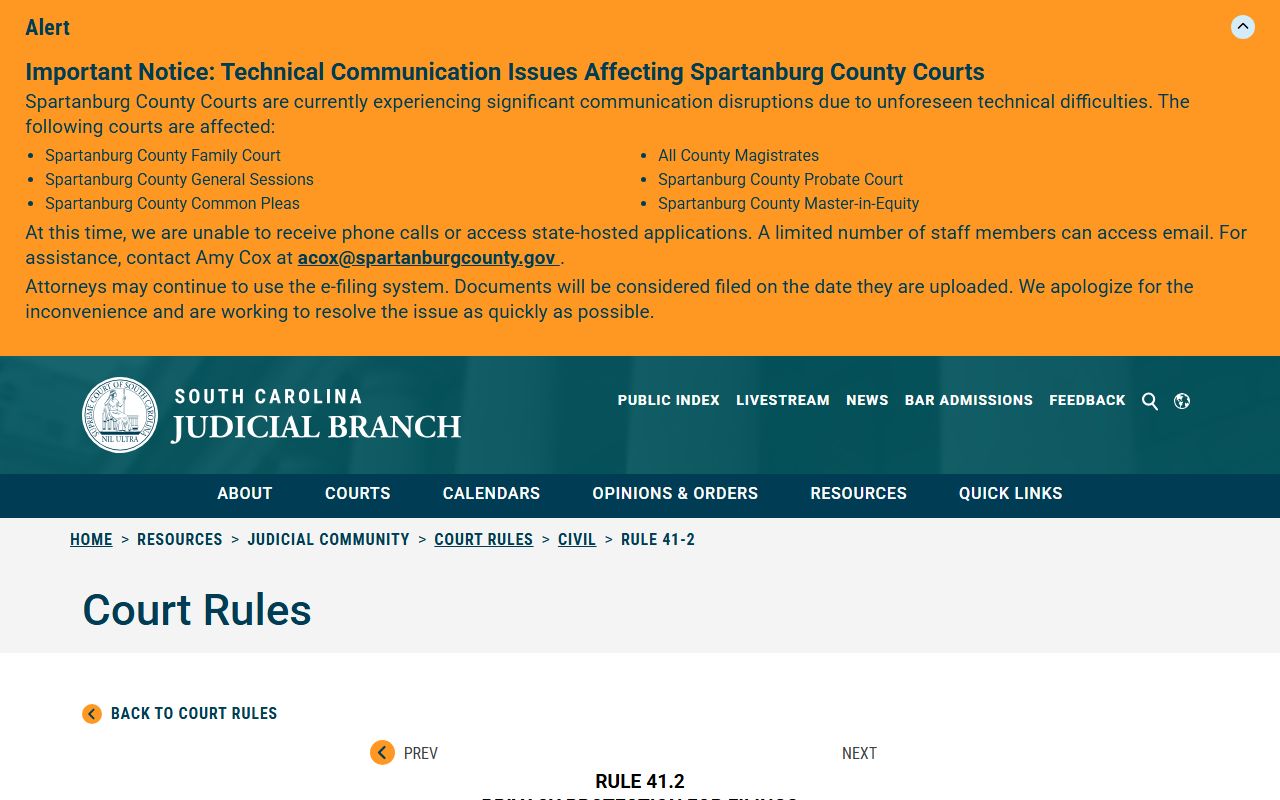
Redaction is narrower than sealing or expungement. It removes protected details while leaving public parts of the record available.
Clarendon County Charge Review
The Third Judicial Circuit Solicitor is Ernest A. Finney, III. The main office is at the Sumter County Judicial Center, and the research file lists a Clarendon phone number of 803-435-4071. The Solicitor's programs include General Sessions prosecution, Family Court juvenile prosecution, victim services, Pretrial Intervention, and Juvenile Arbitration. Pretrial Intervention can run 3 to 12 months and has application and participation fees in the official program material.
Public Defender applications are a separate defense channel. SCCID lists Clarendon County in Circuit 3, and the county Clerk page says a Public Defender application has a $40.00 non-refundable fee paid by cash or money order. Personal checks and credit cards are not accepted for that application. This is not a court filing fee for every criminal case. It belongs to appointed-counsel screening.
The image below comes from the official Clarendon County Sheriff's Office contact page.
The Sheriff's Office is a practical contact point for agency records, while filed court charges should still be checked through the court system.
Restricted Clarendon Charge Records
Public access to arrest records and court charges is not absolute. Juvenile records are restricted. Adoption and many Family Court juvenile records are confidential. Sealed cases, expunged charges, protected identifiers, non-public appellate cases, and some law-enforcement records are not open like ordinary adult criminal court files. Sheriff's FOIA requests may also be limited by exemptions for privacy, safety, or law-enforcement harms.
Magistrate Court has a key role in warrants, bail, preliminary hearings, summary criminal cases, and traffic matters. The county detention page adds that persons held for contempt of court or bench warrants from Family Court, Magistrate Court, Municipal Court, and General Sessions Court do not have ordinary bail or bond hearings at the detention center and must remain in custody until summoned to the applicable court. That fact is important, but it does not mean every missed court date creates immediate custody.
Important: Arrest, charge, and custody records should be verified with the originating court or agency before legal use.